


Why the GCC is Becoming the Next Global Education Hub for International Students (2026)
Introduction
For decades, international students looked first toward the United Kingdom, the United States, Canada and Australia. Those countries still attract millions of students every year. But rising tuition, tighter immigration rules, housing shortages and higher living costs have pushed a growing number of students to widen their search.
The Gulf Cooperation Council region has become one of the most credible alternatives. Backed by national development strategies, international branch campuses and heavy investment in research and technology, the Gulf now offers something it could not offer twenty years ago: internationally recognised degrees, taught in English, in economies that are actively hiring graduates.
This guide covers what the region offers, how the six countries differ, what it costs, and how to find funding.
What is the GCC?
The Gulf Cooperation Council is a regional alliance of six countries: the United Arab Emirates, Saudi Arabia, Qatar, Oman, Bahrain and Kuwait.
Historically known for energy and trade, all six are now investing at scale in higher education, artificial intelligence, healthcare, research and entrepreneurship. Education has moved from a public service to a stated economic priority, written directly into each country's national strategy.
That shift matters to applicants, because it is what funds the scholarships, the new campuses and the research posts.
Why more students are choosing the GCC
1. Internationally recognised universities
The region combines strong national universities with branch campuses of established global institutions. A student can study at NYU Abu Dhabi, Georgetown or Northwestern in Qatar, Heriot-Watt or Birmingham in Dubai, or RCSI in Bahrain, and graduate with the same accreditation as the home campus.
Alongside those, the region's own institutions have built genuine research reputations. KAUST in Saudi Arabia is a graduate-only research university operating entirely in English. MBZUAI in Abu Dhabi is one of very few universities worldwide dedicated exclusively to artificial intelligence.
2. Government investment in education
Each country has tied education to a headline national strategy:
- United Arab Emirates: national programmes including We the UAE 2031 and the National Strategy for Artificial Intelligence 2031 place education and AI capability at the centre of economic planning.
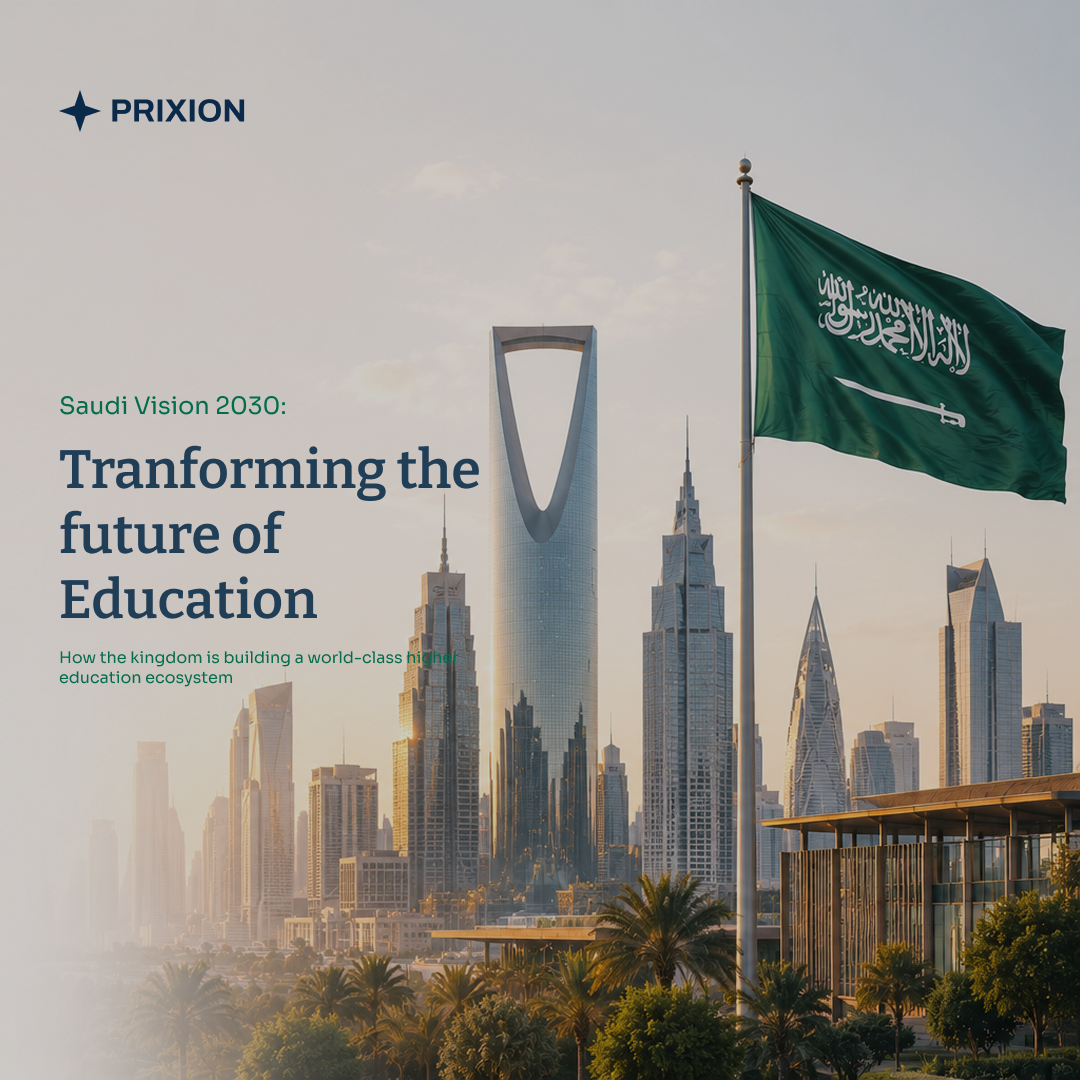
- Saudi Arabia, Vision 2030: wholesale reform of higher education, research funding and workforce development.
- Qatar National Vision 2030: positioning Qatar as a regional hub for education and research, delivered largely through Qatar Foundation's Education City.
These strategies are the reason international universities keep opening campuses in the region rather than closing them.
3. Graduate career pathways
Gulf economies are expanding in exactly the sectors most students are training for: artificial intelligence, cybersecurity, engineering, renewable energy, aviation, healthcare, finance and digital transformation.
Several countries have introduced longer-term residency options for skilled graduates and specialists. Rules change frequently, so check the current position with the relevant government authority before you rely on it in your planning.
4. Modern campuses
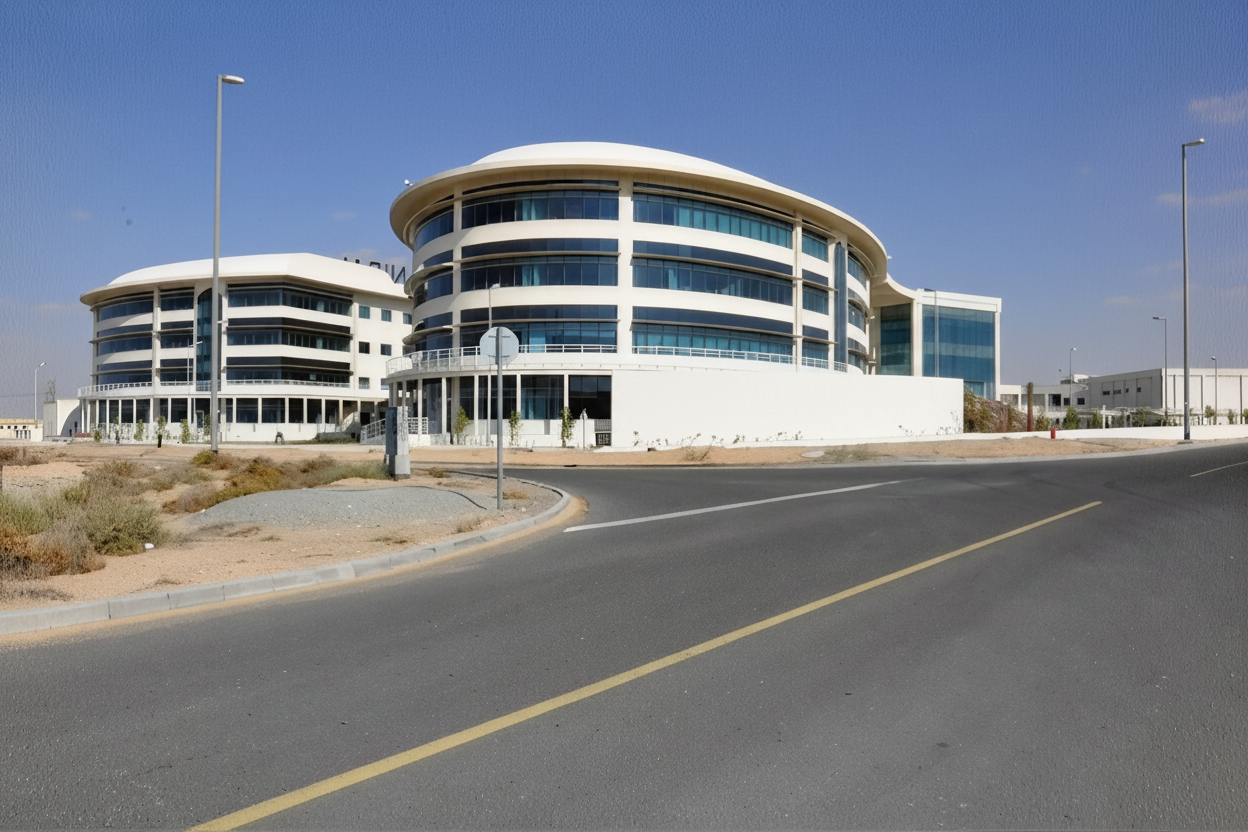
Most Gulf campuses were built or substantially rebuilt within the last two decades. Students typically get access to research centres, innovation labs, startup incubators, dedicated international student services, modern accommodation and strong sports facilities. The infrastructure is newer than at most comparable institutions in Europe or North America.
5. Scholarships that are genuinely available
Universities across the region fund students on academic merit, leadership, sport, research output and through government or bilateral partnerships. Awards range from partial tuition discounts to fully funded places with a living stipend.
The problem is not availability. It is visibility, which is covered in more detail below.
Comparing the six countries
| Country | Strongest for | Language of instruction | Notable institutions |
|---|---|---|---|
| United Arab Emirates | Business, technology, AI, branch campuses | Predominantly English | NYU Abu Dhabi, Khalifa University, American University of Sharjah, MBZUAI, Heriot-Watt Dubai |
| Saudi Arabia | Research, engineering, energy, Vision 2030 sectors | English at research institutions, Arabic at some national universities | KAUST, King Fahd University of Petroleum and Minerals, Alfaisal University, Effat University |
| Qatar | Branch campuses, research, international partnerships | Predominantly English | Education City campuses including Georgetown, Northwestern, Carnegie Mellon and Weill Cornell Medicine, plus Hamad Bin Khalifa University and Qatar University |
| Oman | Affordability, quieter student environment | Mixed English and Arabic | Sultan Qaboos University, German University of Technology in Oman, University of Nizwa |
| Bahrain | Business, finance, medicine | Predominantly English at private institutions | University of Bahrain, RCSI Bahrain, Ahlia University |
| Kuwait | Professional programmes, regional networks | Mixed English and Arabic | Kuwait University, Gulf University for Science and Technology, American University of Kuwait |
Country by country
United Arab Emirates
The UAE has the deepest concentration of international campuses in the region, split mainly between Abu Dhabi and Dubai. Abu Dhabi leans toward research and technology, anchored by NYU Abu Dhabi, Khalifa University and MBZUAI. Dubai leans commercial, with Heriot-Watt, Wollongong, Birmingham and others operating in Dubai International Academic City and Knowledge Park.
It is the most straightforward entry point for students who want an international environment, near-universal English instruction and a large expatriate community. It is also generally the most expensive of the six, particularly for accommodation in Dubai. Students who want the UAE experience at lower cost often look at Sharjah or Ajman.
Best suited to: business, technology, AI, engineering, media, hospitality and entrepreneurship.
Saudi Arabia
Saudi Arabia is the fastest changing higher education market in the region, driven by the funding attached to Vision 2030. KAUST offers fully funded graduate research places with a stipend and operates in English. King Fahd University of Petroleum and Minerals remains one of the region's strongest engineering institutions.
The scale of research funding is the differentiator. For postgraduate researchers in energy, materials, computing or life sciences, Saudi packages are now competitive with anything in Europe. Undergraduate provision for international students is narrower, and instruction language varies by institution, so check programme by programme.
Best suited to: research degrees, engineering, energy, computing and health sciences.
Qatar
Qatar concentrates most of its international provision inside Education City, a single campus in Doha shared by branches of several well known universities. Students enrol at one institution but can typically take courses across the others, which is unusual and genuinely useful.
Qatar Foundation funds a substantial share of students through financial aid and loan-forgiveness arrangements tied to working in Qatar after graduation. Hamad Bin Khalifa University handles most graduate and research provision.
Best suited to: international affairs, journalism, medicine, computer science, business and the arts.
Oman
Oman is the value option. Tuition and living costs are meaningfully lower than in the UAE or Qatar, and the environment is quieter and more culturally traditional, which suits some students well and others not at all.
Sultan Qaboos University is the flagship national institution. The German University of Technology in Oman delivers German-modelled engineering programmes in English. Provision is smaller than elsewhere in the region, so the range of programmes is narrower.
Best suited to: engineering, sciences, tourism and students prioritising affordability.
Bahrain
Bahrain is compact, has a long-established finance sector, and hosts RCSI Bahrain, a medical university of the Royal College of Surgeons in Ireland that awards Irish degrees. That makes it a serious option for medicine and health sciences specifically.
The country is well connected to Saudi Arabia by causeway, and living costs sit below Dubai and Doha.
Best suited to: medicine, health sciences, business and finance.
Kuwait
Kuwait's higher education sector is expanding, with a mix of the large national Kuwait University and a growing set of private institutions delivering American and Australian curricula in English.
International student provision is less developed than in the UAE or Qatar, and the market is more oriented toward regional students. Worth investigating if you have existing family or professional ties to the country.
Best suited to: business, engineering and professional programmes.
English-taught programmes
One of the region's biggest practical advantages is that most internationally oriented programmes are delivered entirely in English, including at many national universities.
Common fields taught in English across the region:
- Engineering
- Computer Science and Artificial Intelligence
- Medicine and Health Sciences
- Business, Finance and Accounting
- Architecture and Design
- Data Science
- International Relations
- Hospitality and Tourism Management
Most institutions require IELTS, TOEFL or an accepted equivalent. Some accept prior study in English in place of a test. Requirements vary by university and by programme, and are frequently the deciding factor in an application, so confirm them early.
What it costs to study in the GCC
Costs vary widely by country, city, institution and programme. As a broad orientation:
- Highest cost: Dubai and Doha, driven mainly by accommodation.
- Mid range: Abu Dhabi, Sharjah, Riyadh, Manama.
- Lowest cost: Muscat and the smaller Omani cities, along with public institutions across the region.
Budget for tuition, accommodation, food, transport, health insurance, student visa fees and personal costs. Health insurance is mandatory in most GCC countries and is sometimes bundled into university fees and sometimes not, which is a common source of budgeting error.
Many Gulf cities offer student discounts on public transport, cultural attractions and university facilities.
Finding scholarships in the GCC
Scholarship funding in the region is substantial. Finding it is the hard part.
There is no single regional portal. Awards sit on individual university websites, are announced on different timelines, use different eligibility criteria, and are frequently not translated or promoted outside their home country. A student applying to six universities in three countries is realistically checking dozens of pages, and will still miss most of what they qualify for.
That fragmentation is the reason a discovery-first model works better than a search-first one. On Grantify, students build one verified profile and universities across the region search for them. Rather than hunting for awards, students receive scholarship offers from institutions that have already confirmed they qualify. Contact details stay private until a university makes a formal offer, and all communication runs through monitored channels, which matters particularly for applicants under eighteen and for the parents and counsellors supporting them.
Is the GCC safe for international students?
Safety is the question families ask first, and it deserves a direct answer rather than a hedge.
The GCC is not one destination. Each country sets its own laws, and travel guidance from your home government will differ between them. Several GCC countries, including the United Arab Emirates, Qatar, Oman, Bahrain and Kuwait, host large international student populations and consistently rank well on personal safety and low violent crime.
Universities in the region generally provide dedicated international student offices, structured orientation programmes and campus security. Many also operate supervised student accommodation, which is often a condition for younger international students.
Practical steps before you commit:
- Read the current travel advice from your home country's foreign affairs department.
- Read up on local laws and customs. Some behaviour that is unremarkable at home is regulated in the Gulf, and the rules differ between the six countries.
- Confirm the university's health, safety and emergency procedures.
- Register with your embassy if that is recommended for your nationality.
For students under eighteen, ask specifically about guardianship requirements, supervised accommodation and how the university communicates with parents. These policies vary considerably and are worth confirming in writing.
Student life
Studying in the Gulf usually means living in a highly international city. Campuses draw students from dozens of countries, and in the larger institutions no single nationality dominates.
What students typically get access to:
- Large and genuinely multinational peer groups
- Modern cities with strong public infrastructure
- Internship pipelines into regional and multinational employers
- Entrepreneurship competitions and startup incubators
- Major international sporting and cultural events
- Well developed campus sports facilities
The experience blends traditional Gulf culture with very international urban environments. Most students find the adjustment easier than expected, though it is worth going in informed rather than assuming a Western campus experience transplanted.
Why the region will keep growing
Several trends point the same direction:
- Sustained state investment in universities and research
- Continued expansion of international university partnerships
- Rapid growth in AI, technology and energy transition sectors
- Rising domestic demand for skilled graduates
- National economic diversification away from hydrocarbons
- Increased competitive research funding
These are long-term structural commitments rather than short-term policy, which is what distinguishes the Gulf from other emerging study destinations.
Frequently asked questions
Can international students study in the GCC in English? Yes. Most internationally oriented programmes across the region are taught entirely in English, including at branch campuses of Western universities and at research institutions such as KAUST and MBZUAI. Some national universities teach partly or wholly in Arabic, so confirm the language of instruction for your specific programme.
Which GCC country is cheapest for international students? Oman is generally the most affordable, with lower tuition and significantly lower accommodation costs than the UAE or Qatar. Public institutions across the region also tend to cost less than private and branch campuses. Dubai and Doha are typically the most expensive.
Are scholarships available for international students in the GCC? Yes, and they are more widely available than most applicants realise. Funding comes from universities directly, from national government programmes and from foundations such as Qatar Foundation. The difficulty is that awards are scattered across individual institutional websites with no central listing.
Is the GCC safe for international students? The countries in the region generally report low violent crime and host large international student populations. Safety guidance varies by country, so check the current advice from your own government's foreign affairs department and read up on local laws before you travel.
Can I work in the GCC after graduating? Several GCC countries have introduced longer-term residency and work pathways aimed at skilled graduates. Rules change frequently and vary by country and by field, so verify the current position with the relevant government authority rather than relying on secondary sources.
Do GCC degrees get recognised internationally? Degrees from accredited institutions and from branch campuses of established international universities are recognised in the same way as their home-campus equivalents. Check the accreditation status of any institution with your home country's recognition authority before enrolling.
Final thoughts
The GCC is no longer an emerging education destination. It is becoming one of the most dynamic higher education regions in the world, and it is doing so deliberately, through sustained state investment in universities, research and international partnerships.
For students, that translates into a real alternative: internationally recognised degrees, taught in English, in economies that are actively recruiting graduates, often with funding attached.
The gap is discovery. Most students never see the majority of the awards they qualify for.