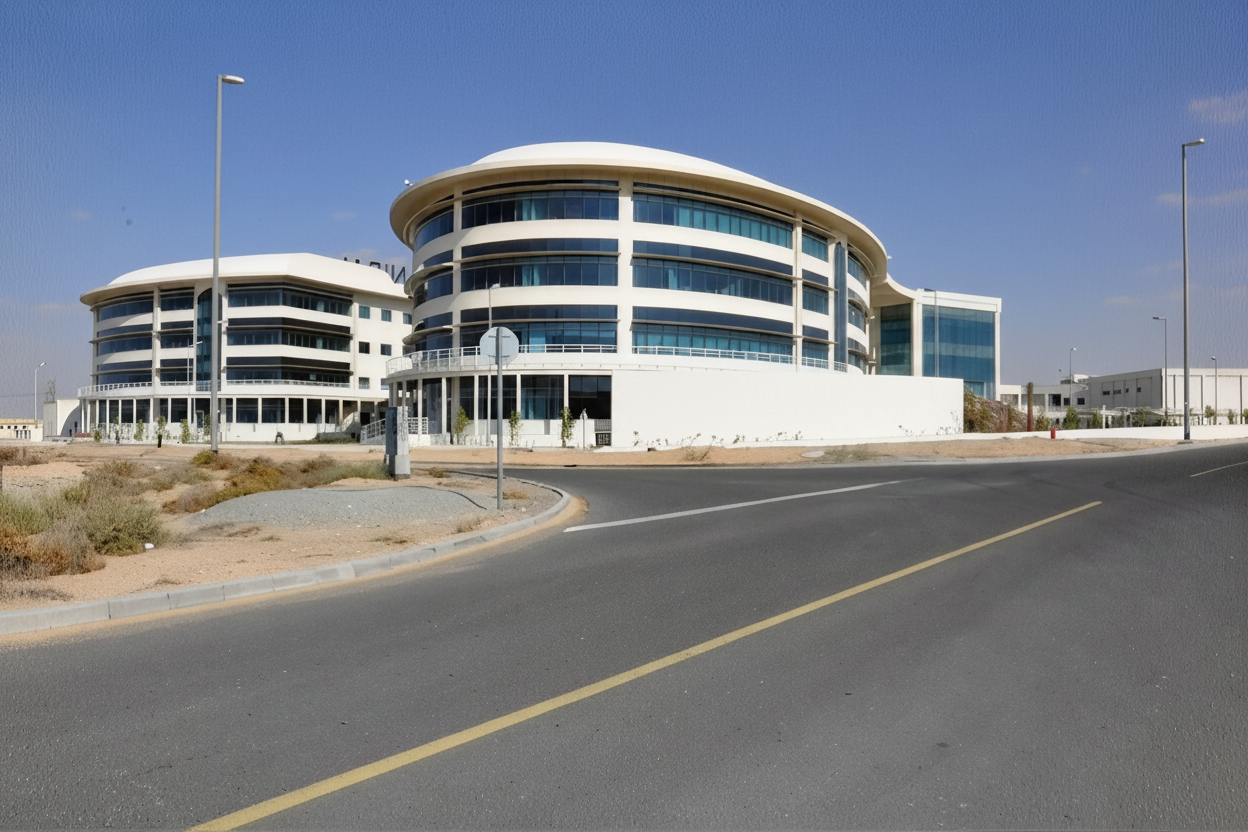



Saudi Vision 2030 and Higher Education
Saudi Vision 2030 and Higher Education
Introduction
Saudi Arabia is roughly a decade into one of the largest national transformation programmes any country has attempted. Vision 2030 covers economic diversification, social reform, infrastructure, governance, and education runs through all of it.
The reasoning is straightforward. An economy moving away from hydrocarbons needs people trained for what replaces them. That makes universities, research funding, and skills policy central rather than peripheral.
For students weighing study destinations, for universities considering partnerships, and for ministries watching how a peer government approaches sector reform at scale, the Saudi programme is worth understanding in detail rather than in summary.
What is Saudi Vision 2030?
Vision 2030 launched in April 2016 under the leadership of Crown Prince Mohammed bin Salman. It is the Kingdom's long-term strategy to diversify the economy beyond oil and build a more competitive, innovation-driven state.
The framework rests on three pillars:
- A Vibrant Society — covering quality of life, culture, and social participation
- A Thriving Economy — covering diversification, employment, and private sector growth
- An Ambitious Nation — covering government effectiveness and accountability
Education contributes to all three, but it is delivered through a specific mechanism rather than diffusely, which is the part most coverage misses.
The Mechanism: Human Capability Development
Vision 2030 is executed through a set of Vision Realization Programs, each with its own governance and targets.
Education and skills sit primarily within the Human Capability Development Program, launched in 2021.
That programme is where the concrete commitments live. It covers:
- Foundational education quality
- Higher education alignment with the labour market
- Lifelong learning
- Development of transferable skills across industries
The Education and Training Evaluation Commission (ETEC) handles quality assurance and accreditation across the sector, which matters to institutions assessing partnerships or recognition.
Building Research Universities
Saudi higher education is not uniform. It is useful to separate three groups.
Research-intensive institutions
-
King Abdullah University of Science and Technology (KAUST)
- Founded in 2009 at Thuwal
- Graduate-only
- English-medium
- Most students fully funded with living stipend
-
King Fahd University of Petroleum and Minerals (KFUPM)
- Dhahran
- One of the region's strongest engineering universities
- Deep ties to the energy sector
Large national universities
- King Saud University (Riyadh)
- King Abdulaziz University (Jeddah)
Both have significantly increased research output and international collaboration over the past decade.
Private and specialist institutions
- Alfaisal University
- Prince Sultan University
- Effat University
- Prince Mohammad Bin Fahd University
These typically offer:
- English-medium programmes
- Internationally modelled curricula
- Professional accreditation
Common investment priorities
- Laboratory capacity
- International faculty recruitment
- Competitive research funding
- External accreditation
Opening to International Institutions
One of the most significant recent reforms is Saudi Arabia's decision to license foreign universities to establish branch campuses inside the Kingdom.
For students
- Access to international degrees without leaving the region
- Lower costs compared to studying abroad
For universities
- Ability to establish physical campuses
- New partnership opportunities
Additional collaboration includes:
- Joint research
- Faculty exchange
- Student exchange
- Dual-degree programmes
- Collaborative curriculum development
Technology in Saudi Higher Education
Saudi universities are adopting AI-enabled systems across teaching, administration, and student support.
Common applications include:
- Adaptive learning platforms
- Early support indicators for struggling students
- AI-assisted academic advising
- Campus service automation
- Digital assessment and integrity tools
- Research support for literature review and data processing
The governance model emphasizes that:
- Humans remain responsible for decisions affecting students.
- Institutions should understand:
- where data is stored,
- who can access it,
- which decisions AI makes versus merely recommends.
Saudi universities have also expanded programmes in:
- Artificial Intelligence
- Data Science
- Robotics
- Machine Learning
Aligning Graduates with Growth Sectors
Vision 2030 has increased demand across several industries, prompting universities to redesign programmes.
| Sector | Why It Is Growing | Typical Degrees |
|---|---|---|
| Artificial Intelligence & Data Science | National AI strategy and digitisation | Computer Science, Data Science, Applied Mathematics |
| Renewable Energy | Solar and hydrogen projects | Electrical, Chemical, Environmental Engineering |
| Healthcare & Biotechnology | Medical localisation | Medicine, Nursing, Biomedical Science, Pharmacy |
| Financial Services & Fintech | Payments reform | Finance, Economics, Computer Science |
| Tourism, Entertainment & Hospitality | New industry under Vision 2030 | Hospitality Management, Event Management, Marketing |
| Logistics & Advanced Manufacturing | Industrial localisation | Supply Chain, Industrial & Mechanical Engineering |
| Smart Infrastructure & Construction | Giga-projects | Civil Engineering, Architecture, Urban Planning |
Alongside technical knowledge, universities increasingly emphasise:
- Communication
- Critical thinking
- Leadership
- Problem solving
- Digital literacy
University and Industry Collaboration
Employer partnerships now include:
- Structured internships
- Applied industry research
- Embedded professional certifications
- Entrepreneurship programmes
- Business incubators
- Career mentoring
- Graduate employment pathways
The objective is that graduates leave with demonstrable experience rather than only academic qualifications.
Opportunities for International Students
Saudi Arabia has become a more realistic destination for international students, particularly at postgraduate level.
Available opportunities include:
- English-taught programmes
- Fully funded postgraduate research (especially at KAUST)
- Modern campuses
- Well-funded laboratories
- International research groups
- Exposure to rapidly growing industries
Before applying, students should verify:
- Admission requirements
- Language of instruction
- Visa and residency rules
- Accommodation
- Student support services
These vary by institution.
Finding Funding
Scholarships are plentiful but fragmented.
Different universities operate:
- Separate applications
- Different deadlines
- Different eligibility criteria
Most applicants miss opportunities simply because funding information is spread across many university websites.
Prixion addresses this by allowing students to:
- Build one verified profile
- Receive scholarship offers directly from universities
- Keep contact details private until formal offers are made
- Communicate through monitored channels
What Is Still in Progress?
The programme remains mid-delivery.
Key ongoing challenges include:
Research impact
Research volume has increased substantially, but citation impact takes longer to mature.
Graduate employment
Increasing private-sector employment remains a major goal.
International collaboration
Many partnerships have been announced, but long-term joint research and dual degrees require sustained implementation.
Institutional consistency
Progress remains uneven between flagship universities and the wider higher education sector.
This pattern is common for reforms of this scale: infrastructure develops quickly, while measurable outcomes take considerably longer.
Looking Ahead
Vision 2030 has transformed Saudi higher education through:
- Sustained investment
- Structural reform
- International partnerships
- Stronger research capacity
- Better alignment with future industries
For students, this creates opportunities—particularly funded postgraduate research—that did not exist a decade ago.
For governments and universities elsewhere, Saudi Arabia represents one of the largest contemporary examples of nationwide higher education reform.
Frequently Asked Questions
What does Saudi Vision 2030 say about education?
Vision 2030 treats education as core economic infrastructure. Reform is primarily delivered through the Human Capability Development Program, which focuses on quality, labour market alignment, lifelong learning, and transferable skills.
Can international students study in Saudi Arabia in English?
Yes.
KAUST operates entirely in English, and many research and private universities offer English-taught technical and professional programmes.
Some public universities still teach partially or fully in Arabic.
Are there scholarships for international students?
Yes.
KAUST funds most graduate students through:
- Tuition
- Accommodation
- Living stipend
Many other universities also offer merit-based and research scholarships.
Can foreign universities open campuses in Saudi Arabia?
Yes.
Saudi Arabia now licenses international universities to establish branch campuses within the Kingdom.
Which Saudi universities are strongest for research?
The leading research universities include:
- KAUST
- King Fahd University of Petroleum and Minerals
Large research producers include:
- King Saud University
- King Abdulaziz University
Is Vision 2030 finished?
No.
The programme runs until 2030 and most education initiatives remain under active implementation.
Final Thoughts
Education has become one of the primary instruments of Saudi Arabia's national transformation.
The investment is substantial, institutional reforms are measurable, and expanded international partnerships have changed opportunities available to students and universities.
Prixion builds infrastructure that supports these reforms by:
- Matching students with universities and scholarships
- Connecting schools, universities, and ministries
- Maintaining human oversight for decisions affecting students
Customer data is stored in-region and is never used to train AI models.